
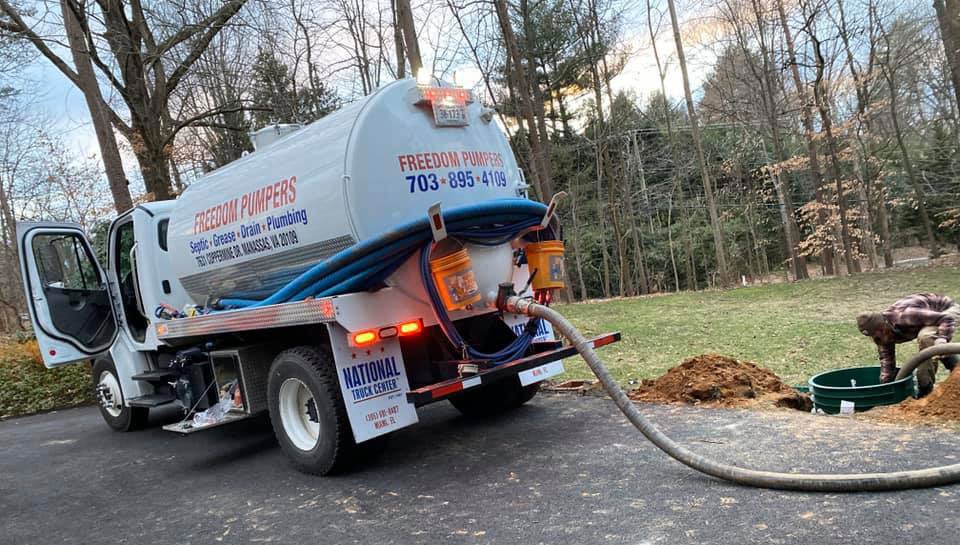
Septic Tank Rehabilitation & Renewal
A better option for some failing concrete septic tanks.
Not every deteriorating concrete septic tank has to be replaced right away. When the structure and site conditions support it, Freedom Plumbers & Pumpers can repair and coat the inside of the tank to help extend its service life. We serve homeowners across Northern Virginia.
Every project starts with a septic tank rehabilitation evaluation. See how it works.
Diagnose. Understand. Recommend.
What is septic tank rehabilitation?
Septic tank rehabilitation is a repair-and-protection process for certain kinds of deterioration inside concrete septic tanks. Sometimes the right answer is replacement, sometimes a targeted repair, and sometimes a protective coating system that helps the tank last longer.
Pumping and cleaning
The tank is emptied and cleaned so the interior can be properly evaluated.
Structural inspection
We look for cracking, corrosion, exposed aggregate, failed baffles, damaged seams, active leakage, unstable concrete, and groundwater pressure.
Surface preparation
Coatings depend on preparation. The Structure Guard manufacturer calls for hydro-blasting at 5,000 psi and a dry, clean surface free of oil, grease, and contaminants.
Repairs to voids, cracks, and penetrations
Where appropriate, compatible repair materials fill gaps, repair penetrations, and rebuild damaged areas before coating.
Protective epoxy coating
Structure Guard-FM is a 100% solids epoxy mastic made to protect and rehabilitate structures such as manholes, wet wells, vaults, and septic tanks.
Documentation
You receive photos, product records, preparation records, cure requirements, and closeout documentation for the work.

When to ask for an evaluation
Signs your concrete tank may be a candidate.
A septic tank rehabilitation evaluation may be worth it when a concrete tank shows any of these conditions, especially when replacement would be costly or disruptive.
- Interior concrete deterioration
- Surface corrosion or softening
- Spalling, pitting, or exposed aggregate
- Damaged seams or penetrations
- Infiltration or exfiltration concerns
- Failed prior patching
- Surface breakdown visible after pumping
- An aging tank where replacement is costly
An honest assessment
When tank coating is not enough.
A coating system will not fix every failed septic tank. Suitability depends on the inspection, the prepared surface, leakage, stability, corrosion, chemical exposure, and overall structural condition. Some tanks need engineering review or full septic tank replacement.
Coating may not be appropriate with:
- Severe structural failure
- Collapsed or collapsing walls or lid
- Major movement or settlement
- Unsafe access conditions
- Groundwater pressure that cannot be controlled
- Unsuitable concrete or unknown structural integrity
What happens then
If concealed deterioration, active leakage, instability, or structural damage turns up, the plan changes. That can mean different preparation, an engineering review, replacement, or a change work order. We explain what we found and why before any added work begins.

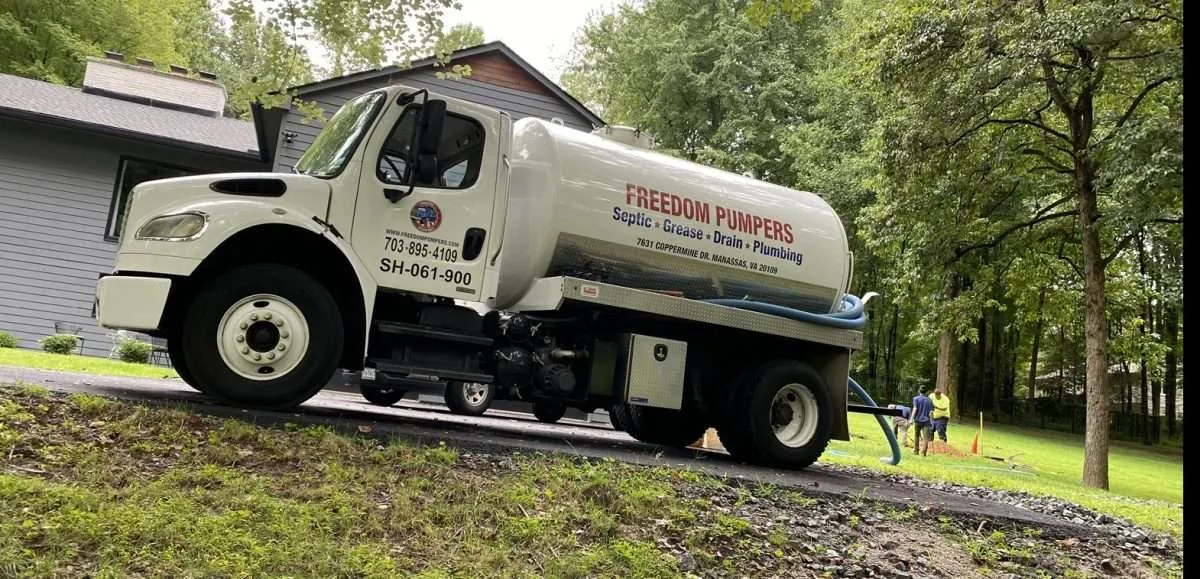
Step by step
Our septic tank rehabilitation process.
Empty the tank so we can see it.
Pumping alone does not authorize repair, coating, tank entry, structural work, or excavation. Those are selected and authorized separately.
Record what we find.
We inspect tank surfaces, risers, baffles, seams, penetrations, lids, and filter assemblies, and separate observed, suspected, and unknown conditions.
Understand what is actually failing.
Before recommending a coating or patch, we look at the leak path, the concrete, movement, groundwater pressure, preparation needs, and immersion compatibility.
Match the system to the tank.
Product, preparation, thickness, cure time, return-to-service timing, and warranty conditions follow the manufacturer’s stated requirements.
Do the approved work.
Freedom or an approved applicator prepares the surface, makes the selected repairs, applies the coating, protects the cure, and documents it.
Walk through the results.
We review what was repaired and coated, any limits that remain, and what you should keep an eye on going forward.
Helpful answers
Septic tank rehabilitation FAQs.
Can every concrete septic tank be coated?
No. Coating works only when the inspection, prepared surface, and structural condition support it. Tanks with severe structural failure, collapsing walls or lids, or uncontrolled groundwater pressure may need replacement.
Does pumping my tank include an inspection for rehabilitation?
Pumping and cleaning come first so the interior can be seen. Repair, coating, tank entry, and structural work are separate services that you select and authorize.
How long until the tank can go back into service?
It depends on the product and conditions. For Structure Guard-FM, the manufacturer lists water contact at 4 hours and final cure at 24 hours at 70°F. We confirm timing for your project before work begins.
Is rehabilitation cheaper than replacing the tank?
When a tank is a good candidate, rehabilitation can mean less excavation and disruption than full replacement. The evaluation tells us whether it is a realistic option for your tank.
Related septic services
Protect the rest of your system.
Schedule a septic tank rehabilitation evaluation.
Call or text (703) 895-4109, or send us a message with your address and what you are seeing in the tank.